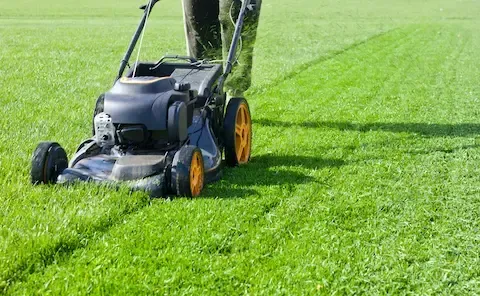
Mowing Kentucky Bluegrass in Apple Valley MN Yards
Kentucky bluegrass is the defining turf species in hundreds of Apple Valley neighborhoods, particularly in older subdivisions developed through the 1980s and 1990s along Cedar Avenue and near the Minnesota Zoo corridor. It produces a dense, attractive lawn when managed correctly, but it has specific requirements that differ meaningfully from the fescues or ryegrasses found in newer seedings. Understanding how to mow it properly through Dakota County's distinct growing seasons is the single most important factor in keeping it healthy and competitive against weeds and drought stress.
Why Kentucky Bluegrass Behaves Differently Than Other Cool-Season Grasses
Kentucky bluegrass spreads through underground stems called rhizomes, which means it repairs itself laterally over time. That recovery ability is one of its greatest strengths, but it also means the grass invests significant energy below the surface. When you cut it too short, you remove the leaf area the plant needs to fuel that below-ground network. The result is a lawn that thins out, turns yellowish, and becomes vulnerable to crabgrass invasion during the hot stretches Apple Valley experiences in July and August.
Bluegrass also enters a predictable summer semi-dormancy pattern. Even with irrigation, most bluegrass lawns in the South Metro slow down noticeably between late June and mid-August. Respecting that dormancy cycle in your mowing decisions protects the turf rather than fighting its natural rhythm.
The Right Cutting Height for Apple Valley Conditions
The standard recommendation for Kentucky bluegrass across Minnesota is three to three and a half inches during active growing periods. In Apple Valley specifically, erring toward three and a half inches provides an extra buffer during warm stretches when temperatures climb into the upper eighties and soil moisture drops. That additional leaf surface shades the root zone, keeps soil temperatures lower, and reduces evaporation between rain events or irrigation cycles.
During the spring flush, which typically runs from late April through late May in Dakota County, bluegrass grows aggressively. You may need to mow every five to six days during peak spring growth to avoid removing more than one third of the blade height in a single pass. The one-third rule is not optional for bluegrass. Scalping the lawn even once during spring green-up can set back root development for several weeks.
As growth slows heading into summer, you can stretch mowing intervals to seven or even ten days without violating the one-third threshold. Reduce your mowing frequency naturally rather than dropping your cutting height to compensate for slower growth. Keeping the blade high during heat stress is one of the most effective and lowest-cost things you can do for a bluegrass lawn.
Blade Sharpness and Cut Quality
Bluegrass has a finer, softer leaf blade than tall fescue, which makes it more sensitive to dull mower blades. A dull blade tears rather than slices, leaving jagged white tips across the lawn surface. Beyond being cosmetically unattractive, those torn tips create entry points for fungal pathogens, particularly during the humid periods Apple Valley sees in June. Gray leaf spot and dollar spot are both opportunistic diseases that gain a foothold more easily in turf that has been mechanically damaged by poor cutting.
A sharp blade produces a clean horizontal cut that heals quickly. For residential mowers, sharpening the blade at least twice per season is a reasonable baseline. If you mow frequently and cover significant square footage, once a month during the growing season is better. You can evaluate cut quality by examining a handful of grass blades after mowing. Clean cuts reflect light evenly and the tips are consistent in color. Torn cuts look frayed and the tips go white within a day.
If you rely on a lawn mowing service to handle your property, ask directly how often they sharpen their blades and whether they service residential routes with dedicated equipment rather than sharing commercial decks across heavy workloads.
Clipping Management and Thatch Concerns
Kentucky bluegrass is one of the grasses most prone to thatch accumulation. Thatch is the layer of dead stems, roots, and organic debris that builds up between the soil surface and the living grass blades. A thin layer up to half an inch is normal and even beneficial. Beyond that, it blocks water infiltration, harbors insects, and creates an uneven surface that makes consistent mowing heights difficult to achieve.
Returning clippings to the lawn is generally beneficial for nitrogen cycling and does not meaningfully accelerate thatch buildup when you mow at the right frequency. Clippings from properly timed cuts decompose quickly. The problem arises when mowing is delayed and clippings are long and dense. Those heavy clippings mat down, dry slowly, and contribute to the thatch layer rather than breaking down cleanly into the soil.
If you notice your Apple Valley lawn developing a spongy feel underfoot, particularly in full-sun areas near the front of the property or along south-facing slopes, a core aeration in September can open the soil profile and accelerate thatch breakdown without removing the turf structure.
Seasonal Timing Across the Dakota County Calendar
The first mow of the season in Apple Valley usually falls between late April and early May, depending on spring soil temperatures and how quickly the turf breaks dormancy. Do not rush the first cut. Mowing over saturated soil compacts it and creates ruts, particularly on clay-heavy lots common in many Cedar Avenue adjacent neighborhoods. For how mowing fits alongside feeding, aeration and the seasonal cleanups, the complete cool-season lawn care guide for Apple Valley puts the full calendar in one place.
Mowing continues through October and sometimes into early November if the fall is warm and wet, as it often is in the South Metro. Fall is actually one of the most important mowing periods for bluegrass because the grass is actively storing carbohydrates for winter survival. Maintaining proper height into late October supports that process. The final cut of the season should bring the lawn down to around two and a half to three inches to reduce the risk of snow mold, which can be significant in Dakota County after heavy early-season snow events.
For more detail on timing decisions across the full growing calendar, reviewing our cool season mowing schedule provides context on how bluegrass responds to temperature transitions at both ends of the season.
Common Mistakes Apple Valley Homeowners Make With Bluegrass
The most frequent error is cutting too short in an attempt to reduce mowing frequency. Dropping to two inches or below in summer puts the lawn under severe stress precisely when it is already managing heat load. A thinned-out bluegrass lawn in August becomes a crabgrass lawn by September.
The second common mistake is mowing when the grass is wet. Wet bluegrass clumps on the deck, cuts unevenly, and spreads fungal spores across the lawn surface. Scheduling mowing for mid-morning after dew has dried is a simple practice that produces noticeably better results over the course of a season.
The third mistake is ignoring directional variation. Mowing in the same direction every pass trains the grass blades to lean in one direction, which creates a grain effect and can compact specific soil channels over time. Alternating your mowing pattern between sessions encourages more upright blade growth and more even cuts.
Getting Consistent Results Through the Growing Season
Kentucky bluegrass in Apple Valley is a high-performing turf species when its basic requirements are respected. Sharp blades, consistent height at three to three and a half inches, frequency adjusted to growth rate rather than convenience, and thoughtful seasonal timing are the pillars of a healthy bluegrass lawn. None of these practices require expensive inputs or specialized equipment. They require attention to what the grass is telling you as conditions change across the Dakota County calendar and a willingness to adjust rather than apply a fixed routine regardless of what the lawn needs.
