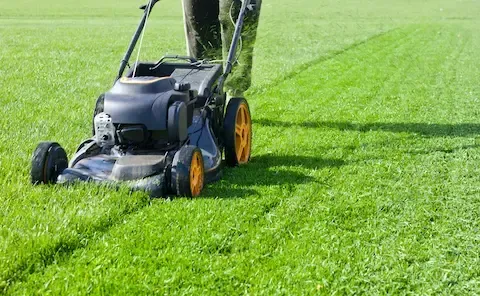
Mulching vs Bagging Grass Clippings in Apple Valley MN
Every mowing session leaves you with a choice: send those clippings through the chute into a bag, or let the mower mulch them back into the turf. In Apple Valley, where summers swing between dry stretches and humid growth flushes, that decision has real consequences for your lawn's health, your schedule, and the condition of your soil by fall. Neither approach is universally correct, but understanding what each one does to your turf will help you make the right call week to week.
What Actually Happens When You Mulch Grass Clippings
Mulching cuts clippings into fine pieces and deposits them between grass blades, where they decompose and release nutrients back into the soil. The process works because grass clippings are roughly 85 percent water and contain meaningful amounts of nitrogen, potassium, and phosphorus. When clippings break down quickly, that nitrogen re-enters the soil within a few weeks, effectively providing a slow-release fertilizer boost without any added cost.
For Apple Valley lawns built on the heavy clay soils common throughout Dakota County, this organic matter also helps improve soil structure over time. Clay soil compacts easily and drains poorly, and consistent mulching adds a steady supply of decomposing material that feeds soil microbes and gradually loosens the texture. If your lawn struggles with compaction or thatch, mulching during the main growing season is often one of the easiest corrective steps you can take.
The catch is volume. Mulching only works well when clippings are short enough to filter down between the blades. If you wait too long between mowings and cut off more than one-third of the blade height at once, thick clumps pile on top of the turf, block sunlight, and create conditions where disease and pests thrive. Consistent mowing intervals are essential if you plan to mulch regularly.
When Bagging Makes More Sense for Dakota County Yards
Bagging removes clippings entirely, which is the right move under several specific circumstances. In early spring, Apple Valley lawns come out of dormancy unevenly, and many yards see a surge of growth that outruns the mower. During that initial flush, clippings are long, wet, and dense — exactly the conditions where mulching creates problems. Bagging those first cuts of the season keeps the lawn surface clean and reduces the risk of smothering new growth just as it gets started.
Bagging is also the better choice if your lawn has been dealing with fungal disease. Brown patch, dollar spot, and other common Minnesota lawn diseases spread partly through infected clippings left on the turf. Removing clippings during an active outbreak limits how far the disease moves across the yard. Similarly, if weeds like creeping charlie or dandelions have gone to seed, bagging removes those seeds from the lawn rather than spreading them with each pass of the mower.
Fall leaf drop presents another situation where bagging often wins. In Apple Valley neighborhoods lined with mature oaks and maples, leaves mix with grass clippings in late September and October, creating a heavy, wet mat that suffocates turf going into dormancy. Bagging or collecting that material keeps the lawn surface open and allows air to reach the crowns of the grass plants before the ground freezes.
Practical Considerations for Minnesota's Growing Season
Most Apple Valley homeowners get the best results from a flexible approach that shifts with the season. Mulching works well during the predictable mid-summer growth period when turf is actively growing at a manageable pace, temperatures are warm enough for rapid decomposition, and rainfall keeps soil microbes active. Under those conditions, clippings break down fast enough that they rarely accumulate visibly on the surface.
Switching to bagging makes sense during growth surges — typically May and early June in the Twin Cities metro — and again in late fall when the combination of slower decomposition and leaf litter creates more risk than benefit. You can also alternate between the two based on your specific mowing schedule. If life gets busy and you miss a week, bag the longer clippings rather than forcing the mower to mulch material it can't properly process.
For a lawn mowing service operating in Apple Valley, knowing how to read the turf on any given visit — adjusting the discharge method based on growth rate, moisture, and season — is what separates a genuinely healthy lawn from one that just looks cut. That kind of attentiveness over a full season makes a measurable difference in how the lawn enters and exits winter.
Common Mistakes Homeowners Make With Clippings
One of the most frequent errors is mulching when the lawn is wet. Wet clippings clump immediately and stick to the soil surface in dense mats rather than filtering down between grass blades. Even a short lawn can produce problematic clumps if the grass is heavy with morning dew or recent rainfall. Waiting until the turf dries before mowing is a simple adjustment that dramatically improves how well mulching performs.
Another mistake is assuming that bagging prevents thatch buildup. Thatch is primarily made up of stems, roots, and other lignin-rich plant material — not grass clippings. Clippings decompose too quickly to contribute significantly to thatch under normal conditions. If your lawn has a thatch problem, the cause is usually soil compaction, overwatering, or excessive fertilizer application, not mulching. Aerating and dethatching are the appropriate solutions, not switching to bagging year-round.
Skipping mowing frequency adjustments is the third common issue. Whether you mulch or bag, mowing on a fixed schedule regardless of how fast the grass is growing leads to problems. In Apple Valley's variable spring weather, growth rates can nearly double in a wet week. Adjusting your mowing frequency — rather than just your cutting height — is the more effective way to manage the lawn through those periods.
Making the Right Choice for Your Specific Lawn
The grass type on your property also matters. Most Apple Valley lawns are planted with Kentucky bluegrass or tall fescue blends — cool-season grasses that grow vigorously in spring and fall but slow significantly during July heat. During cooler months, decomposition is slower, which means mulched clippings take longer to break down. During the warm core of summer, decomposition accelerates and mulching becomes more efficient.
If you're evaluating your current mowing approach and wondering whether switching methods would improve your results, reviewing our cool season mowing schedule can help you align your decisions with the actual growth patterns typical for this part of Minnesota. Timing your approach to the season rather than using a one-size-fits-all method is what ultimately keeps Dakota County turf looking its best from first green in April through the final mow in October.
