Aeration and Overseeding for Apple Valley MN Lawns
Compacted soil and thinning grass are common problems for Apple Valley homeowners, especially after Minnesota's harsh winters and heavy summer foot traffic. Core aeration combined with overseeding provides the most effective solution for restoring lawn density and improving soil conditions in Dakota County's challenging clay-based terrain.
Understanding Soil Compaction in Apple Valley
Apple Valley's clay-heavy soil composition creates unique challenges for lawn health. When soil becomes compacted, water and nutrients cannot penetrate effectively to grass roots. This compaction occurs naturally over time but accelerates with foot traffic, lawn equipment use, and Minnesota's freeze-thaw cycles that compress soil layers throughout winter months.
Compacted soil restricts root growth and creates an environment where weeds thrive while desirable grass struggles. You'll notice signs of compaction when water pools on your lawn surface after rain, when grass appears thin despite regular watering, or when the soil feels hard underfoot even after moisture.
Core aeration addresses these issues by removing small plugs of soil, creating channels for air, water, and nutrients to reach grass roots. The process also reduces thatch buildup and stimulates new root development, essential for maintaining healthy turf in Dakota County's variable climate conditions.
Optimal Timing for Dakota County Lawns
Late summer through early fall represents the ideal window for aeration and overseeding in Apple Valley. September typically provides the best conditions, with soil temperatures still warm enough to encourage seed germination while air temperatures begin cooling for optimal grass growth.
Spring aeration can work but presents challenges with weed competition and summer stress on newly established grass. Fall timing allows new grass to develop strong root systems before winter dormancy, creating resilient turf that emerges healthier the following spring.
Consider soil moisture when scheduling aeration. The soil should be moist enough for easy core extraction but not waterlogged. After significant rainfall, wait 24-48 hours before aerating to achieve optimal soil conditions for the process.
Core Aeration Process and Equipment
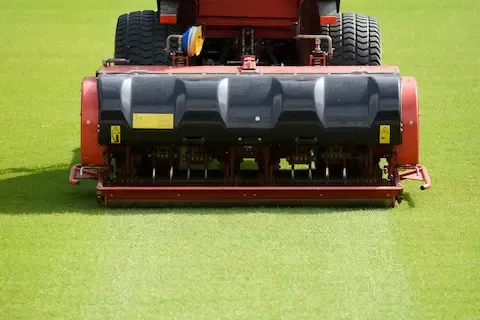
Professional lawn aeration uses specialized equipment that removes soil cores approximately 2-3 inches deep and ½ inch in diameter. These machines create holes spaced 2-4 inches apart across your entire lawn area, ensuring comprehensive soil decompaction.
The removed soil cores remain on the lawn surface where they break down naturally, returning organic matter to the soil. This process may initially create a messy appearance, but the cores dissolve with watering and weather exposure within 2-3 weeks.
Multiple passes may be necessary for severely compacted areas. Heavy clay soils common in Dakota County often benefit from cross-pattern aeration, where the machine makes passes in perpendicular directions to maximize soil penetration and core removal density.
Grass Seed Selection for Zone 4b
Minnesota's Zone 4b climate requires cool-season grasses that tolerate temperature extremes and recover well from winter damage. Tall fescue blends work exceptionally well in Apple Valley, offering drought tolerance and traffic resistance ideal for family lawns.
Perennial ryegrass provides quick establishment and dense growth, making it excellent for overseeding thin areas. Fine fescue varieties handle shade well and require less water once established, perfect for areas under mature trees common throughout Apple Valley neighborhoods.
Avoid warm-season grasses that cannot survive Minnesota winters. Premium seed blends specifically formulated for northern climates provide the best establishment rates and long-term performance in Dakota County growing conditions.
Seed application rates typically range from 2-4 pounds per 1,000 square feet for overseeding, depending on existing grass density and desired coverage speed. Higher rates may cause overcrowding and weak grass development.
Overseeding Techniques and Best Practices
Successful overseeding begins immediately after aeration while soil cores remain visible and soil channels stay open. This timing ensures maximum seed-to-soil contact, critical for germination success in Apple Valley's competitive growing environment.
Broadcast spreading provides even seed distribution across large areas. Walk at a steady pace and overlap passes slightly to avoid streaking or missed spots. Cross-pattern seeding, similar to fertilizer application, helps achieve uniform coverage.
Light topdressing with quality compost improves seed contact with soil and provides nutrients for early growth. Apply no more than ¼ inch of material to avoid smothering existing grass or creating drainage issues.
Water management proves crucial during the establishment period. Keep seeded areas consistently moist but not saturated for 14-21 days while seeds germinate. Light, frequent watering works better than deep, infrequent applications during this critical phase.
Post-Treatment Care and Maintenance
New grass seedlings require special attention during their first growing season. Avoid heavy foot traffic for 6-8 weeks after seeding to prevent damage to developing root systems. Pet traffic should also be redirected during establishment.
First mowing should occur when new grass reaches 3-4 inches tall, cutting no more than one-third of the blade length. Sharp mower blades prevent tearing young grass plants and reduce stress on establishing turf.
Fertilization timing affects new grass success. A starter fertilizer applied at seeding provides essential nutrients without overwhelming young plants. Follow up with our lawn fertilization overview for comprehensive seasonal feeding strategies.
Monitor moisture levels throughout fall and provide supplemental watering during dry periods. Even drought-tolerant varieties need consistent moisture during establishment phases.
Common Mistakes and How to Avoid Them
Aerating wet soil creates muddy conditions and poor core extraction, reducing the process effectiveness. Check soil moisture by inserting a screwdriver 3-4 inches deep. If the tool penetrates easily without excessive soil sticking, conditions are appropriate for aeration.
Over-watering newly seeded areas causes more problems than under-watering. Saturated soil prevents oxygen from reaching seeds and roots, leading to fungal issues and poor germination rates common in Dakota County's humid conditions.
Applying too much seed creates competition among seedlings, resulting in weak grass that struggles through winter. Follow recommended seeding rates and resist the temptation to apply extra seed for faster results.
Skipping soil testing leads to pH and nutrient imbalances that prevent successful grass establishment. Apple Valley soils often require lime applications to achieve optimal pH levels for grass growth.
Long-term Benefits for Apple Valley Lawns
Regular aeration and overseeding creates cumulative improvements in lawn health and appearance. Annual treatments develop thick, resilient turf that crowds out weeds naturally and withstands Minnesota's challenging weather patterns.
Improved soil structure from consistent aeration reduces runoff and enhances water infiltration, important considerations for Dakota County's environmental stewardship goals. Better water penetration also reduces irrigation requirements during dry periods.
Dense, healthy grass provides superior erosion control on slopes and high-traffic areas common in Apple Valley residential landscapes. Strong root systems develop better anchorage and stability compared to thin, struggling turf.
Property values benefit from well-maintained lawns that demonstrate ongoing care and attention. Professional aeration and overseeding represents an investment in long-term landscape health and neighborhood aesthetics.
Combining core aeration with overseeding addresses Apple Valley's specific soil challenges while establishing resilient turf adapted to Minnesota's Zone 4b climate. This proactive approach creates lasting improvements that enhance both lawn performance and property value throughout Dakota County's growing seasons.
