Minnesota Phosphorus Rules for Apple Valley MN Yards
Minnesota's phosphorus fertilizer law applies to every lawn in Apple Valley, and understanding it helps you avoid fines while keeping your yard healthy and your neighbors' waterways clean. The Minnesota Phosphorus Lawn Fertilizer Law, passed in 2004, restricts when and how phosphorus can be applied to established turf statewide. Dakota County's proximity to the Minnesota River, along with local lakes like Alimagnet and Farquar, makes these rules especially meaningful here. Runoff carrying excess phosphorus feeds algae blooms that choke aquatic life and degrade the water quality that Apple Valley residents depend on for recreation and ecology.
What the Minnesota Phosphorus Law Actually Prohibits
The law is straightforward: you cannot apply phosphorus-containing fertilizer to established lawns in Minnesota unless one of two narrow exceptions applies. Phosphorus is the middle number in the three-number fertilizer label — for example, a bag labeled 24-4-12 contains 4% phosphorus. A bag labeled 32-0-10 contains zero phosphorus and is fully legal for routine use on your Apple Valley lawn.
The prohibition covers any residential, commercial, or public turf area where grass is already growing and established. It doesn't matter whether you're fertilizing in spring, summer, or fall — if the lawn already exists, phosphorus is off-limits for general application. This applies to professional lawn care companies and homeowners equally. There are no grandfather clauses and no workarounds based on how your lawn looks or what a neighbor does differently. If you want the plain-language version of what Minnesota's lawn fertilizer law means for Apple Valley homeowners, that breakdown covers the practical side of the same statute.
The Two Legal Exceptions for Apple Valley Homeowners
Minnesota law does recognize two situations where phosphorus fertilizer is permitted on lawns, even when they are established.
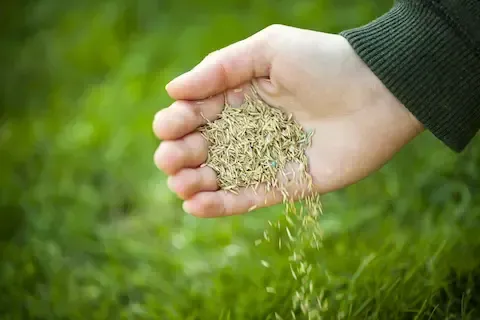
New lawn establishment: If you are seeding, sodding, or sprigging a new lawn — or reseeding a significant bare area — phosphorus fertilizer may be applied during the establishment period. This exception covers areas where less than 50% of the soil surface has vegetative cover. Once your lawn is established, the exception no longer applies to that area.
Documented soil test deficiency: If a soil test performed by a laboratory accredited in Minnesota demonstrates that your soil is genuinely phosphorus-deficient, you may apply phosphorus at the rate the test recommends. The key word is documented — you need the actual test results on hand, not a guess or a general sense that your lawn looks thin. Dakota County Extension services can guide you to accredited labs and help you interpret results correctly. This is the legitimate path for Apple Valley yards with genuinely depleted soil, particularly in neighborhoods with heavy clay or recently disturbed ground from construction.
Reading a Fertilizer Bag Correctly
When you're standing in a hardware store or reviewing what your lawn care provider plans to use, look at the three numbers on the label. These are the N-P-K values representing nitrogen, phosphorus, and potassium. For routine lawn use in Apple Valley under Minnesota law, you need that middle number to be zero. Common compliant options include formulas like 28-0-3, 30-0-6, or similar. Bags marketed as "phosphorus-free" or "Minnesota compliant" are generally your safest choice for established turf.
If you hire a lawn fertilization company, it is entirely reasonable to ask them directly what fertilizer formula they use and whether it complies with Minnesota law. Any reputable provider operating in Apple Valley should be able to answer that question immediately and without hesitation.
Why These Rules Matter Specifically in Apple Valley
Apple Valley sits within the Minnesota River watershed, and stormwater from residential streets flows through a network of catch basins and drainage systems that ultimately reach sensitive water bodies. Alimagnet Lake, Farquar Lake, and the creek systems that run through Lebanon Hills Regional Park in neighboring Eagan are all downstream of residential runoff in this area.
Dakota County and the City of Apple Valley have both invested significantly in stormwater management infrastructure and water quality monitoring. Excess phosphorus in these systems accelerates eutrophication — the process by which a lake fills with algae, loses oxygen, and becomes inhospitable to fish and other aquatic life. The 2004 state law was enacted specifically because lawn fertilizer had been identified as a measurable contributor to this problem across Minnesota lakes and rivers.
Enforcement of the law falls to local municipalities. Apple Valley can issue civil penalties for violations, and Dakota County's Soil and Water Conservation District has resources to help homeowners understand their obligations. Fines vary but can be significant, particularly for repeat violations by commercial applicators.
Common Misconceptions Apple Valley Residents Should Avoid
One of the most common misunderstandings is that organic fertilizers are automatically exempt. They are not. If an organic product contains phosphorus — and many do — it is still subject to the same restrictions. Read the label regardless of how the product is marketed.
Another misconception is that a "weed and feed" product is safe because it's widely sold. Again, check the middle number. Many combination products contain phosphorus, and their retail availability does not make them legal for use on established Minnesota lawns outside of an applicable exception.
Some homeowners also assume that applying phosphorus in fall is different from spring. The law does not distinguish by season for established turf. The prohibition applies year-round.
Practical Steps for a Compliant Apple Valley Lawn
Start by checking whatever fertilizer products you currently have in your garage. If the middle number is anything other than zero, hold onto those products for a legitimate exception scenario or dispose of them through Dakota County's hazardous waste program. Going forward, purchase only phosphorus-free formulas for routine use.
If your lawn is genuinely struggling despite proper nitrogen and potassium applications, consider ordering a soil test before assuming you need phosphorus. A documented deficiency is your legal path if one truly exists. For new seeding projects — whether you're reestablishing a section killed by grubs or installing a completely new lawn after construction — phosphorus is permitted during the establishment phase, so take advantage of that window appropriately.
For more background on how fertilization fits into a complete seasonal care plan, review our lawn fertilization overview which covers timing, product selection, and application rates suited to the Dakota County growing season.
Following Minnesota's phosphorus rules isn't complicated once you understand them. Zero in the middle, or a documented reason for an exception — that's the standard every Apple Valley yard should meet.
