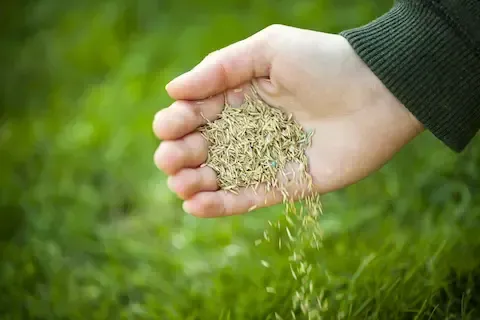
Summer Fertilizer Timing for Apple Valley MN Lawns
Getting summer fertilizer timing right in Apple Valley separates a lawn that stays thick and green through August from one that burns out and goes thin by mid-July. Minnesota's continental climate swings hard, and Dakota County lawns face real heat stress during the peak of summer. Knowing when to feed your grass, when to hold back, and when to resume is one of the most practical things you can do to protect the investment you've already made in your turf.
Why Summer Fertilizer Timing Is Different From Spring
Spring fertilization gets a lot of attention because the growth response is dramatic and fast. You apply, the lawn greens up, and the results are obvious within days. Summer is more nuanced. Cool-season grasses like Kentucky bluegrass and fine fescues, which make up the majority of lawns in Apple Valley and throughout Dakota County, naturally slow their growth as soil temperatures climb above 85 degrees Fahrenheit. Pushing nitrogen into a lawn during that slowdown does not accelerate growth — it stresses the plant and increases the risk of disease and burn.
The goal of summer fertilization is maintenance, not stimulation. You are trying to keep turf density and color stable, not force a flush of lush growth during conditions the grass did not evolve to handle.
The July Pause and Why It Protects Your Lawn
Most lawn care professionals and university extension guidelines for Minnesota recommend a pause in fertilization during the hottest weeks of summer. In Apple Valley, that window typically falls between late June and early August, depending on the year. During a July heat wave when daytime highs are pushing into the upper 90s and nights stay warm, your lawn is already under physiological stress. Adding a fertilizer application during that period can:
- Trigger forced growth the plant cannot sustain in heat
- Increase susceptibility to dollar spot and brown patch fungal diseases
- Cause tip burn along grass blades, especially with granular fertilizers left on dry turf
- Push root systems shallow when deep root development is what summer resilience depends on
Skipping July fertilization is not neglect — it is strategy. Letting the lawn slow down naturally and focusing on consistent watering during that window gives roots time to push deeper into the soil profile where moisture and cooler temperatures remain more stable.
Reading the Signs That Summer Heat Has Peaked
Rather than following a fixed calendar date to resume fertilizing, experienced lawn care providers in the Apple Valley area watch conditions. The most reliable signal is evening temperature. When overnight lows begin dropping consistently into the mid-60s or below, cool-season grasses shift from survival mode back into active growth. That transition usually happens in late July or early August in Dakota County, though it varies year to year.
Other indicators to watch alongside temperature include:
- Grass recovering more quickly after mowing rather than looking wilted the following day
- Soil moisture retaining better overnight after irrigation
- New lateral growth appearing at the base of turf plants, especially in Kentucky bluegrass
- Color returning to areas that looked dull or gray-green during peak heat
These signals matter more than the date on the calendar. Apple Valley's position in the southern Twin Cities metro means it can warm faster in spring and hold heat a bit longer in late summer than areas further north, so reading local conditions is more useful than following generic Midwest schedules.
Choosing the Right Product for Late Summer Applications
When conditions do permit a mid-to-late-summer application, product selection matters. High-nitrogen fast-release fertilizers that drive rapid green-up are appropriate in spring but carry more risk when soil and air temperatures are still elevated. For late-summer applications in Apple Valley, a slow-release or controlled-release nitrogen source gives the lawn a steadier, more manageable feed over several weeks rather than a single hard push.
Look for products where a significant portion of the nitrogen — ideally 50 percent or more — comes from a slow-release source such as sulfur-coated urea or polymer-coated urea. These formulations are more forgiving if a heat spike returns after you apply, and they continue feeding the turf as temperatures cool into September, which sets up a stronger root base heading into fall.
For professional lawn fertilization that accounts for Apple Valley's specific seasonal patterns and product timing, working with a local provider takes the guesswork out of product selection and application windows.
Summer Watering and Fertilizer Work Together
No fertilizer schedule succeeds in summer without adequate irrigation. Dakota County lawns need roughly one to one and a half inches of water per week during summer, including rainfall. When you apply fertilizer without that water availability, the product can sit concentrated in the soil or on leaf surfaces and cause damage rather than feeding the turf.
If Apple Valley is in a stretch of drought and you have not been able to maintain consistent irrigation, hold off on any fertilizer application until you can return to a regular watering schedule. Fertilizing a drought-stressed lawn amplifies stress rather than relieving it.
Watering deeply and infrequently — two to three times per week rather than light daily sprinkles — encourages the deep root development that makes summer fertilizer applications safer and more effective. Shallow roots near the soil surface are more vulnerable to fertilizer concentration and more sensitive to heat fluctuations.
Connecting Summer Timing to a Full-Season Plan
Summer fertilization does not stand alone. It fits inside a full-season program that typically includes a spring application, a carefully timed mid-summer maintenance round if conditions allow, a more substantial late-summer or early-fall application as temperatures cool, and a final winterizer application in October. Each step builds on the last, and missing a step or applying at the wrong time creates a deficit that the next application has to compensate for.
If you want a clearer picture of how summer timing fits into the broader calendar, reviewing our lawn fertilization overview covers the full program from early spring through fall winterizer applications specific to this area.
What Apple Valley Homeowners Should Do Right Now
Whether it is early summer or late summer when you are reading this, the most important step is honest assessment. Look at your lawn's current condition, check what evening temperatures have been running, and review when your last application was. If your last fertilizer went down in May or early June and you are now seeing consistent overnight lows below 65 degrees in Dakota County, you are likely in a reasonable window to resume feeding with a quality slow-release product. If temperatures are still running hot, give it another two weeks and check again.
The lawns that look best in Apple Valley through September are usually the ones where summer fertilization was treated as a careful, condition-dependent decision rather than a fixed point on the calendar.
