Granular vs Liquid Fertilizer for Apple Valley MN Lawns
Choosing the right fertilizer format for your Apple Valley lawn is not just about grabbing whatever is on sale at the hardware store. The cold winters and variable springs of Dakota County put real demands on cool-season turf, and understanding how granular and liquid fertilizers behave differently can mean the gap between a lawn that struggles through August and one that stays dense and green all season long. Both formats deliver nutrients, but they do it on very different timelines and through very different mechanisms.
How Granular Fertilizers Work
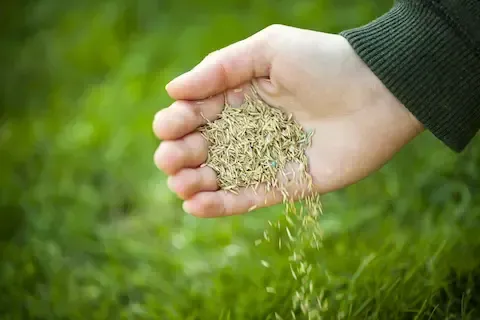
Granular fertilizers are solid pellets or prills that sit on the soil surface until moisture dissolves them and carries nutrients downward. In Apple Valley, most homeowners applying granulars are using either quick-release or slow-release formulas, and the distinction matters enormously. Quick-release granulars dissolve fast, delivering a sharp burst of nitrogen that greens turf within days. Slow-release granulars, which use polymer or sulfur coatings, break down over six to twelve weeks depending on soil temperature and moisture.
That slow-release window is particularly useful for Minnesota lawns. Soil temperatures in Dakota County fluctuate enough in spring and fall that a slow-release product can continue feeding roots even as surface conditions cool down. You apply once, and the product keeps working without requiring you to be back on the lawn every two or three weeks. The trade-off is that you have less immediate control over exactly when nutrients become available, and dry stretches slow the release further because there is less moisture to break down the coating.
How Liquid Fertilizers Work
Liquid fertilizers are dissolved nutrient solutions applied through a hose-end sprayer, backpack sprayer, or professional ride-on equipment. Because the nutrients are already in solution, they are immediately available to plant tissue either through foliar uptake or rapid soil absorption. This means you can see greening begin within twenty-four to forty-eight hours of application, which is notably faster than any granular product.
For Apple Valley lawns that have gone off-color after a dry spell or a harsh winter, a liquid application can provide rapid visual recovery. Liquid formulas also allow applicators to combine nutrients with other products like iron, which deepens turf color, or biostimulants that support root development. The limitation is duration. Liquids are consumed or leached relatively quickly, so they require more frequent reapplication than a quality slow-release granular. On a dense Kentucky bluegrass lawn common in Dakota County subdivisions, you might need liquid applications every three to four weeks to maintain consistent nutrition.
Side-by-Side Comparison for Minnesota Growing Conditions
When you compare the two formats against the realities of Apple Valley's growing season, several practical differences become clear.
Application timing flexibility: Granulars can be spread dry and left to activate with rain. Liquids need to be watered in or rely on foliar uptake, which requires the right timing around heat and sunlight to avoid leaf scorch.
Nutrient consistency: Slow-release granulars produce steady feeding curves without peaks and valleys. Liquids create a spike that fades, which can cause uneven color if intervals between applications stretch too long.
Versatility: Liquids allow mixing and customization on the fly. A professional can blend an iron supplement into a liquid fertilizer application during a single visit, something not possible with granulars.
Cost per application: Granulars typically cost less per application and cover more area per hour of labor. Liquids require more equipment and more frequent visits, which adds up over a full season.
Runoff risk: On the clay-heavy soils found in parts of Dakota County, quick-release granulars applied before a heavy rain can run off before they dissolve. Liquids applied at low rates actually carry lower runoff risk when applied correctly.
Why Many Apple Valley Programs Use Both
Experienced lawn care professionals in the Apple Valley area rarely treat granular versus liquid as an either-or decision. The most effective programs layer both formats strategically across the season. A slow-release granular applied in early May provides sustained nutrition through the heat of June and into July. A liquid application in late May or early June can push quick color response right before peak outdoor season when curb appeal matters most. As fall approaches, another granular application with higher potassium supports root hardening ahead of the Dakota County winters.
This blended approach takes advantage of what each format does well. The granular handles the slow nutritional foundation, and the liquid handles rapid response situations. If your lawn is recovering from grub damage, drought stress, or a late snowmelt that compresses the spring green-up window, a liquid gets nutrients into the plant faster than waiting on a granular to dissolve. Knowing when to apply matters as much as knowing what to apply, and summer fertilizer timing for Apple Valley MN lawns covers the July pause and the signals that tell you to resume.
For more context on how timing and product selection fit into a complete seasonal plan, read our lawn fertilization overview, which covers the full calendar approach for Minnesota cool-season turf.
Practical Considerations for DIY Applicators
If you are managing your own Apple Valley lawn, granulars are generally easier to handle without specialized equipment. A quality broadcast spreader covers most residential lots efficiently, and a slow-release product gives you a buffer if your timing is slightly off. Liquids require a reliable sprayer, careful calibration to avoid over-application, and attention to weather conditions. Applying a liquid fertilizer during a ninety-degree afternoon in July can stress already hot turf.
Regardless of which format you use, soil testing is the smartest starting point. Dakota County soils vary significantly in pH and baseline nutrient levels, and applying fertilizer without knowing what the soil already contains can lead to over-fertilization or wasted product. The University of Minnesota Extension offers soil testing guidance specific to Minnesota residential lawns and can help you interpret results for your specific turf type.
When to Call a Professional
Some situations in Apple Valley benefit from professional judgment rather than off-the-shelf products. If your lawn has persistent bare patches, compaction from clay soil, or is coming out of a winter with significant winterkill damage, a professional can assess whether the right intervention is a granular recovery program, a liquid biostimulant application, or a combination approach alongside aeration or overseeding.
Professional lawn fertilization services in the area have access to commercial-grade products not available at retail, including enhanced-efficiency granulars with more consistent release curves and professional liquid formulas with broader nutrient profiles. The investment often pays for itself in avoided wasted applications and more consistent results across the growing season.
Both granular and liquid fertilizers have a legitimate place in a well-managed Apple Valley lawn program. Understanding what each does and when to use it puts you ahead of most homeowners who simply grab the same bag every spring and wonder why results vary year to year.
